


Leah Downing
she/her
Rethinking Digital Identity
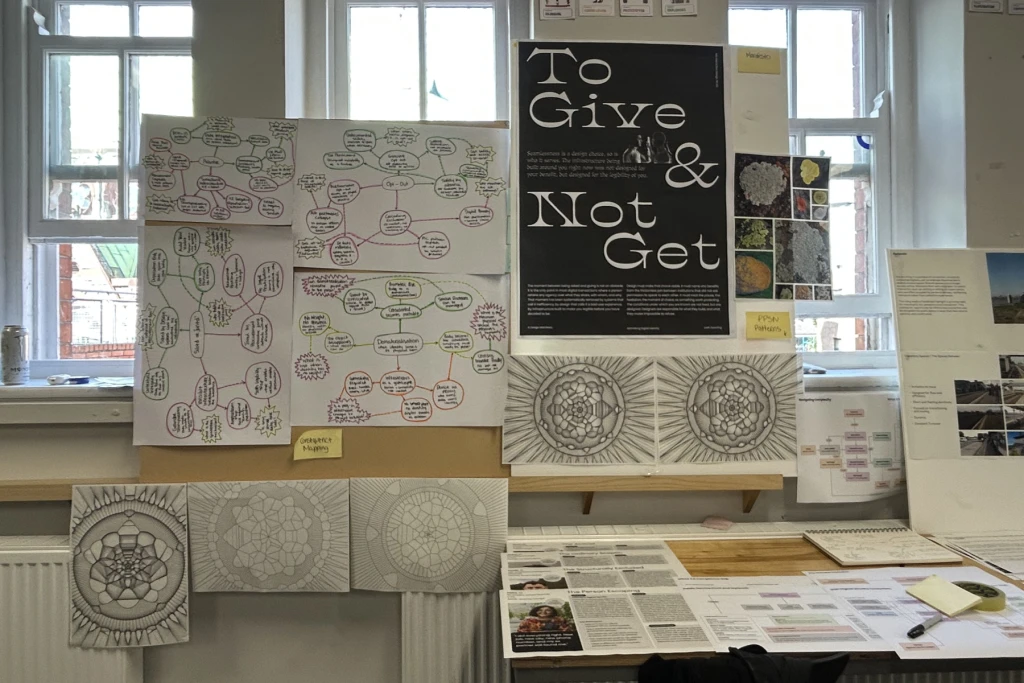
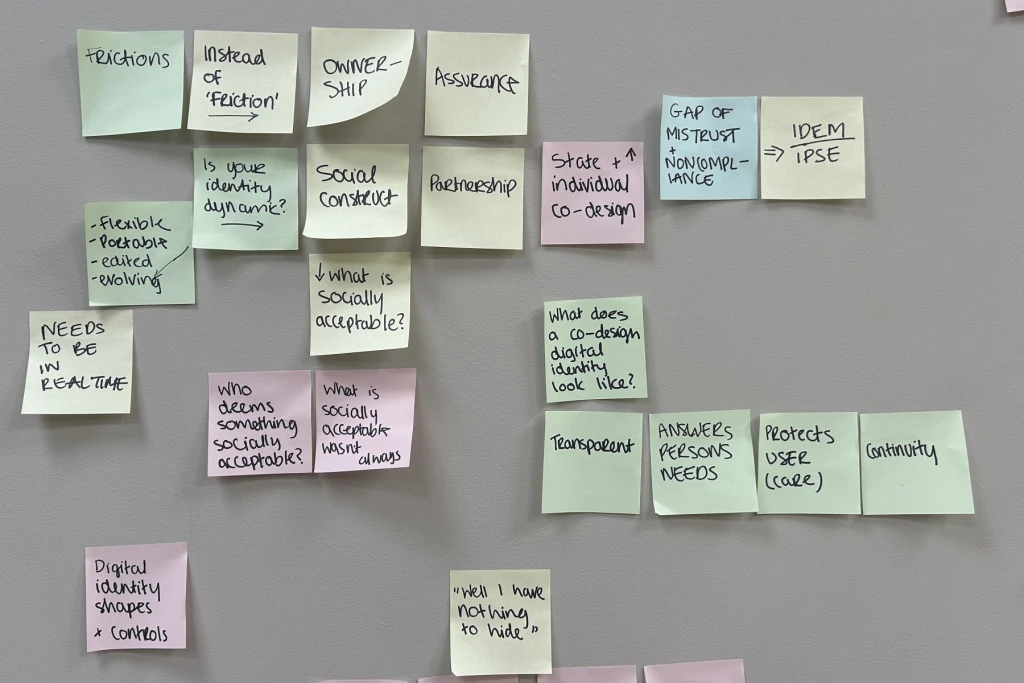
The philosopher Paul Ricoeur distinguished between two kinds of identity: idem, the sameness that persists across time, and ipse, the selfhood that is lived, narrative, and always becoming. Identification systems are built on idem logic. They need you to be consistent, fixed, and matchable to a record, but people live ipse lives, and the gap between the two is where this project begins.
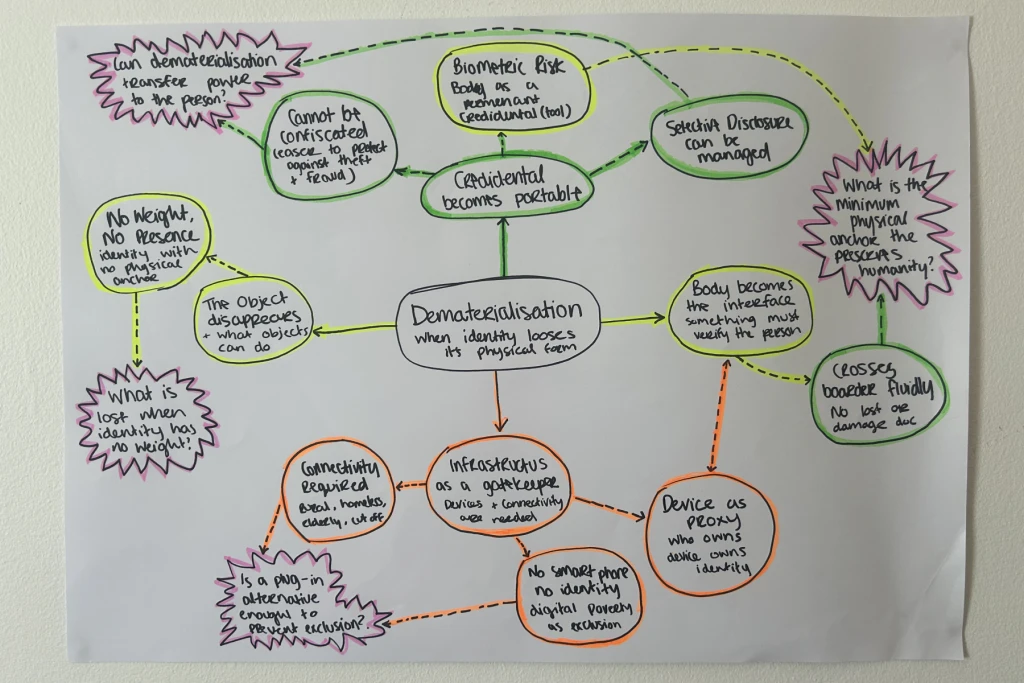
Three questions run through the research. What is identity, and what is lost when it becomes identification? What happens when data is joined rather than siloed, and what does history tell us about who benefits when it is? And what does dematerialisation do to the relationship between a person and the systems that govern their life?
History answers the data question with uncomfortable consistency. Every time information has been joined across systems, whether race registries, religious records, residential histories, or behavioural profiles, it has been used against people. The Amsterdam Jewish population register made a community visible to a state that wanted to persecute it. China's Hukou classification system assigns rural residents a status that locks them out of urban services permanently. The United States used census data to intern Japanese Americans during the Second World War. Palantir's contracts with ICE built the infrastructure for mass deportation targeting. Bowker and Star, writing on the politics of classification, argued that categories are never neutral and that their consequences fall hardest on those whose lives do not fit the schema. This is evidence of a pattern: data joined at scale, in the hands of institutions with interests of their own, produces harm at scale.
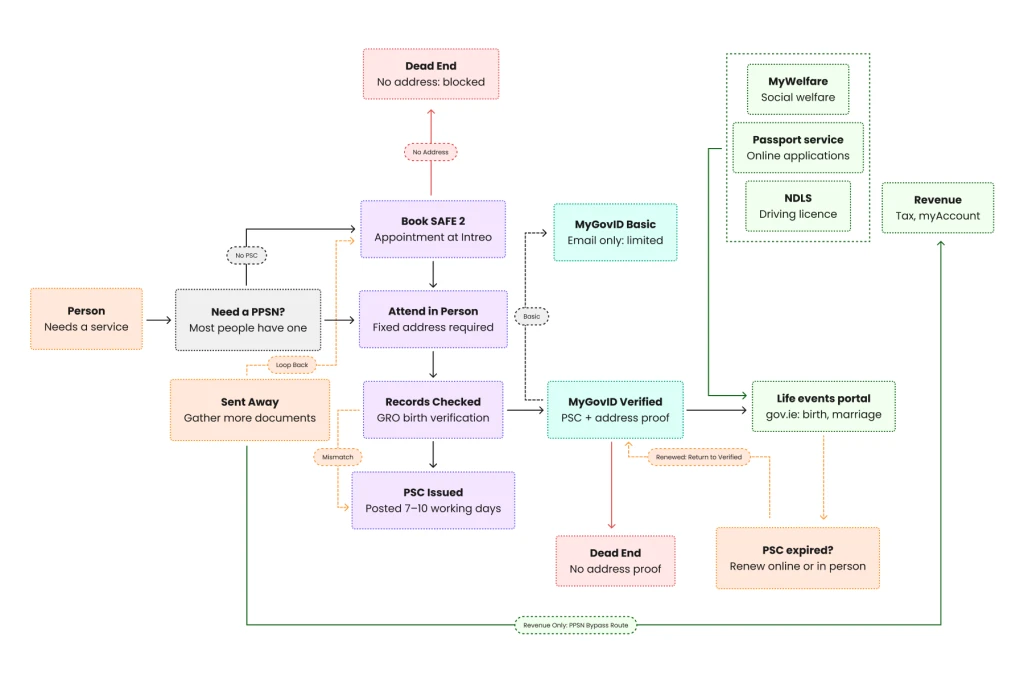
Ireland is building a national digital identity system right now. The decisions being made at this moment, about architecture, procurement, and governance, will shape who can access state services for decades. The wallet being built to meet the EU's eIDAS 2.0 deadline of November 2026 is being built by an unnamed external contractor, on infrastructure that already has documented governance failures, under a regulatory framework that mandates interoperability across EU member states without mandating value alignment. The credential will travel across borders. Irish data protections will not necessarily travel with it. When identity moves from something carried and held to data that exists in a system, the power relationship changes in ways that are not always visible to the person whose identity it is. Whether that shift is liberating or dangerous depends entirely on who controls the infrastructure that replaces the object.
The identity question is the oldest one. Before the state, before the card, before the number, identity was relational. You were known by your community, vouched for by people who knew you, present in a room in a way no document could fully capture. The state replaced that with classification because it needed to make populations legible in order to manage them. Helen Nissenbaum's theory of contextual integrity offers a frame: information flows appropriately when they match the norms of the context in which information was originally shared. Current identity systems violate this constantly, moving data across contexts in ways the person neither anticipated nor consented to. Classification served the institution. The project is a piece of design research in progress, working across speculative design, policy intervention, and co-design with communities directly affected by the systems it examines. The question it asks is whether digital identity infrastructure can be designed on a different logic, one where the system is made legible to the person rather than the person made legible to the system.
The people this system has always failed are not edge cases, they are the most precise evidence of what it was built for and what it was not. Designing for them first, from the margins outward, is not a gesture toward inclusion, it is the most rigorous way to test whether a system actually holds the values it claims to.
Identity infrastructure should not feel like a trial. People are entitled to access it without being interrogated, without being reduced to a number, without their data becoming the raw material for someone else's product.

Research