MSc Medical Device Design
Sims (Andrew) Kelly
Bright Osadolor
Chase Ackerman
Conan Connaughton
Eoghan Lalor
Gabriella Da Naia
Hannah Veale
James Metchette
Laura Xifra Soliño
Sara Castillo Vasquez
Shoaib Saudagar
Sophie Ryan
Tom Furlong Whitfield
The MSc Medical Device Design is a 12-month, studio-based taught course, which places an emphasis on human-centered design and innovation. Graduates from creative and technical disciplines work side-by-side in a design studio environment in collaboration with clinical and industry partners.
The programme consists of a combination of taught modules and studio-based project work. Taught modules include Basic Medical Science, Research Methods, Human Factors, Bioinstrumentation and Regulatory Affairs. As part of the Research Methods module students work with students of the MA Interaction Design and MA Service Design students on projects with the Mater Hospital. As part of Design and Quantify students work with the Medical Physics team at St. James’s Hospital.
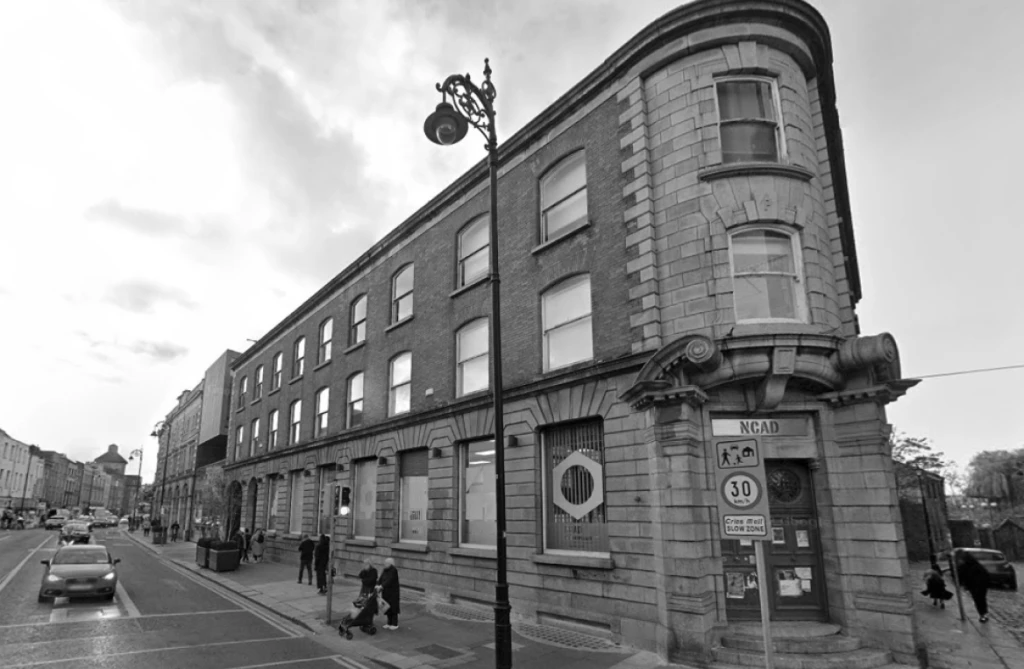
Studio projects focus on various aspects of the medical device design process such as usability, risk and sustainability while always emphasising the human centred design process. All projects are run at NCAD in conjunction with industrial and clinical partners. Industry partners include multinational companies with a base in Ireland, along with Irish start-up companies. In all cases, the design briefs are connected to live industry projects on which the companies are working. Students present their work to company engineers and scientists at the research, concept and final design stages. This enables the students to produce significant work in a real world product design and development environment. Feedback from industry tutors and practitioners forms an invaluable part of the learning process.
The MSc Medical Device Design runs over three trimesters and students are currently starting work on their final projects with industrial and clinical collaborators. These collaborations are an important part of our curriculum and enable real world human centred design studio learning. Unfortunately the majority of the work is proprietary and subject to non disclosure agreements and cannot be displayed during the design phase.
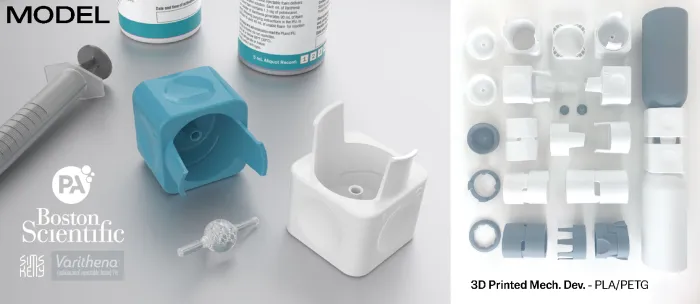
Boston Scientific have kindly allowed us to display some of the work the students have done with them on their Varathena product. This project focused on the packaging for a product used for the treatment of varicose veins. The brief for this project was to redesign the packaging for the product taking account of various aspects including the procedure, human factors and sustainability.