Jess Gibney Harrison
she/her
Maybe This Time: Cabaret’s Constant, Necessary Warnings and How They’re Constructed
My work is inspired by the 1966 Broadway production of Cabaret, and all of the versions that have followed over the years.
One of the key features of the original production was a large, distorted mirror hanging over the stage that was tilted at an angle so that the audience could see themselves during the show. It was a deliberate choice by set designer Boris Aronson to collapse the boundary between performer and spectator. By forcing the viewers to confront their own image while witnessing the subtle descent into fascism on stage, modern audiences are warned about the danger of passively observing injustice while enjoying comfort and entertainment.
Aronson's mirror embodies a visual metaphor for self-deception, moral blindness and using pleasure to avoid confronting growing extremism.
Research
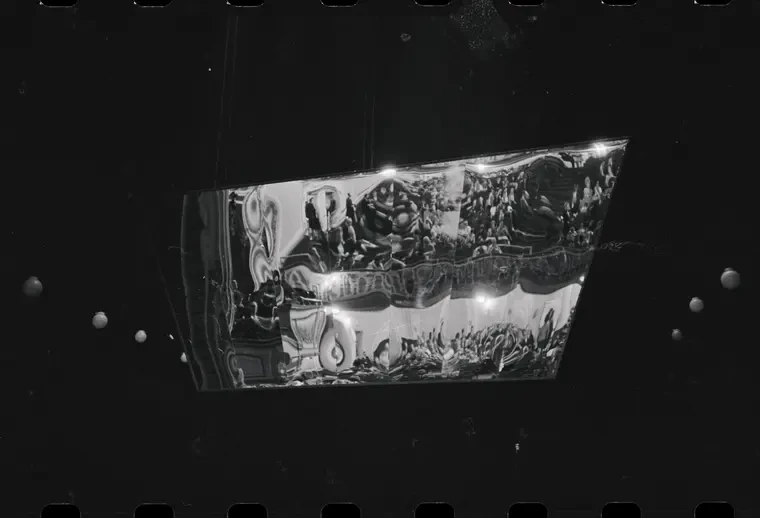
Boris Aronson’s mirror in the 1966 production of 'Cabaret'.
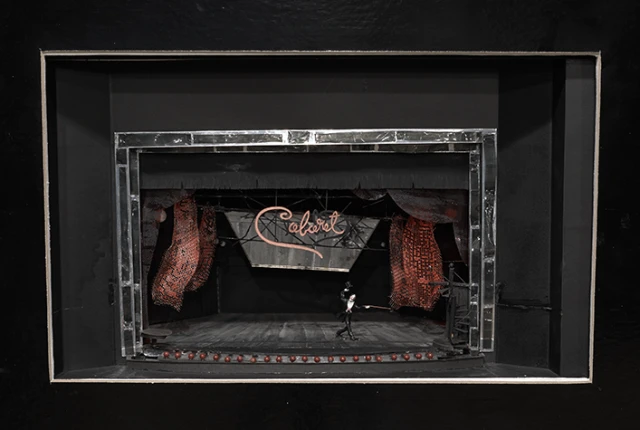
Boris Aronson's set model for the 1966 production of 'Cabaret'.