
Elise Phillimore
she/her
Woven Networks: Women, Collaboration, and the Transformation of Irish Wool, 1900–Present
My thesis, Woven Networks: Women, Collaboration, and the Transformation of Irish Wool, 1900–Present explores how networks of women weavers, organisers and educators shaped weaving in Ireland as a sustainable economic and creative practice across the twentieth and twenty-first centuries. Rather than understanding weaving solely through narratives of philanthropy, rural necessity, or heritage craft, this project investigates how women collectively built systems of labour, knowledge-sharing, and enterprise that transformed both the economic and material identity of Irish wool.
The project began with a series of questions: Why and how were women weaving in Ireland in the twentieth century? Was weaving primarily philanthropic, cultural, or economically necessary? And how did Irish wool itself change over time—from heavy, coarse, utilitarian fabric into lightweight, colourful textiles associated with fashion, design, and creative production? These questions led to a wider investigation into the networks that enabled weaving to survive and evolve across generations.
At the centre of the thesis is the argument that the success of Irish weaving was not created by isolated individuals alone, but through interconnected systems of support and collaboration. Women worked through overlapping networks of workshops, guilds, education, exhibitions, business relationships, and community organisations that allowed weaving to move beyond subsistence labour and become part of domestic and international design economies. The project therefore reframes Irish weaving as a networked system of labour and creativity rather than a series of exceptional individuals working independently.
The first chapter focuses on early- to mid-twentieth-century women-led weaving enterprises and examines how networks of support and advocacy enabled economic success. Figures such as Emily Wynne and the Wynne sisters of Avoca Handweavers, alongside Frances Baker Farrell of The Crock of Gold, are explored not only as entrepreneurs but as participants within wider systems of production and exchange. The chapter also considers the role of organisers such as Muriel Gahan and Kitty Ryan, whose promotion of weaving and cottage industries helped create pathways for women’s economic participation.
A key concern throughout the research is how these women collectively transformed Irish wool itself. Historically associated with rough brown tweed and rural utility, Irish wool was reimagined through experimentation in spinning, weaving, colour, and finish. The project traces how women-led weaving studios developed lighter, softer, and more colourful textiles that appealed to changing fashion and interior markets, eventually attracting international attention from designers including Elsa Schiaparelli and Coco Chanel. This material transformation forms an important part of the thesis, demonstrating how aesthetic innovation and economic ambition operated together.
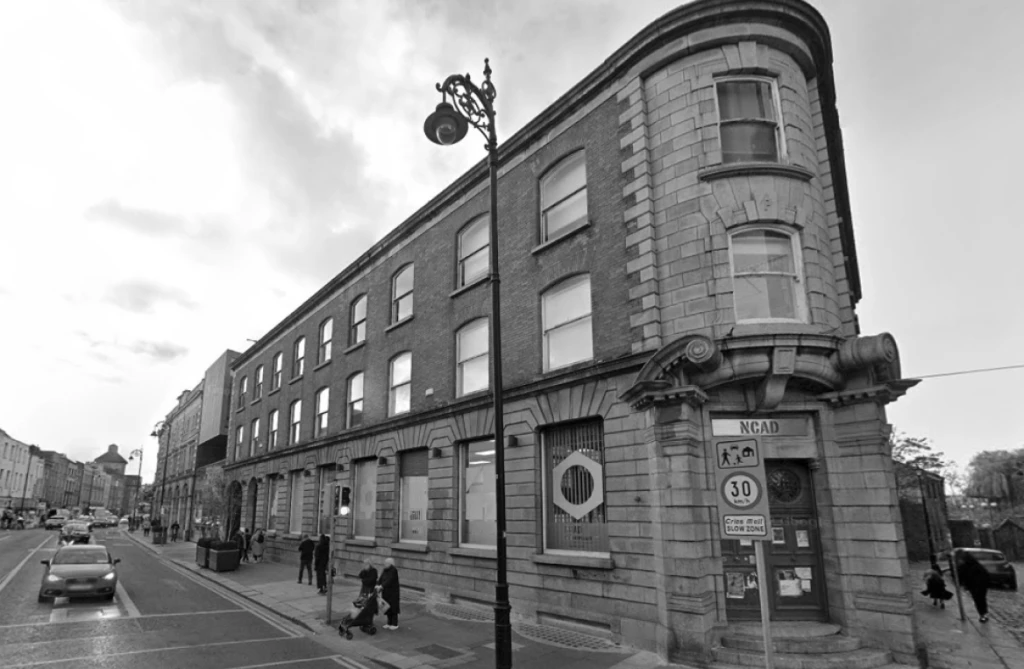
The second chapter explores how these informal networks became formalised through institutions, education, and professional organisations. Dun Emer Industries is examined as an early workshop model that linked production, labour, and training, while the work of Lillias Mitchell demonstrates how weaving became professionalised through studio practice, guild organisation, and education. Mitchell’s involvement with the Irish Guild of Weavers, Spinners and Dyers and the weaving department at National College of Art and Design helped establish systems of skill transmission and professional legitimacy that continue to shape Irish weaving today.
The final chapter examines how these networks continue to operate in the present day through community groups, weaving studios, exhibitions, and fibre organisations. Contemporary practitioners including Liz Christy Handweaving Studio, Cyndi Graham Handweaving Studio, and Beth Moran are considered alongside organisations such as Liberties Weavers and the continuing work of the Irish Guild of Weavers, Spinners and Dyers. The thesis also incorporates emerging fibre networks such as Fibreshed Ireland, whose focus on local wool, regenerative textile systems, and collaborative production demonstrates how historical weaving networks continue to evolve in response to contemporary environmental and economic concerns.
Research for the project combines archival study, oral history interviews, exhibition visits, and material analysis. Sources include the Ballymore House Collection, the National Library of Ireland, Trinity College Dublin Archives, NIVAL, and studio visits to contemporary weaving spaces including Avoca and independent handweaving studios. Through engagement with woven objects, textile archives, and living practitioners, the thesis foregrounds weaving as both embodied knowledge and economic labour.
Ultimately, Woven Networks argues that women’s weaving in Ireland should be understood not simply as heritage preservation or philanthropic craftwork, but as a dynamic network of labour, creativity, collaboration, and material innovation. Across generations, women transformed Irish wool, built sustainable creative infrastructures, and developed systems of support that continue to shape Irish textile culture today.
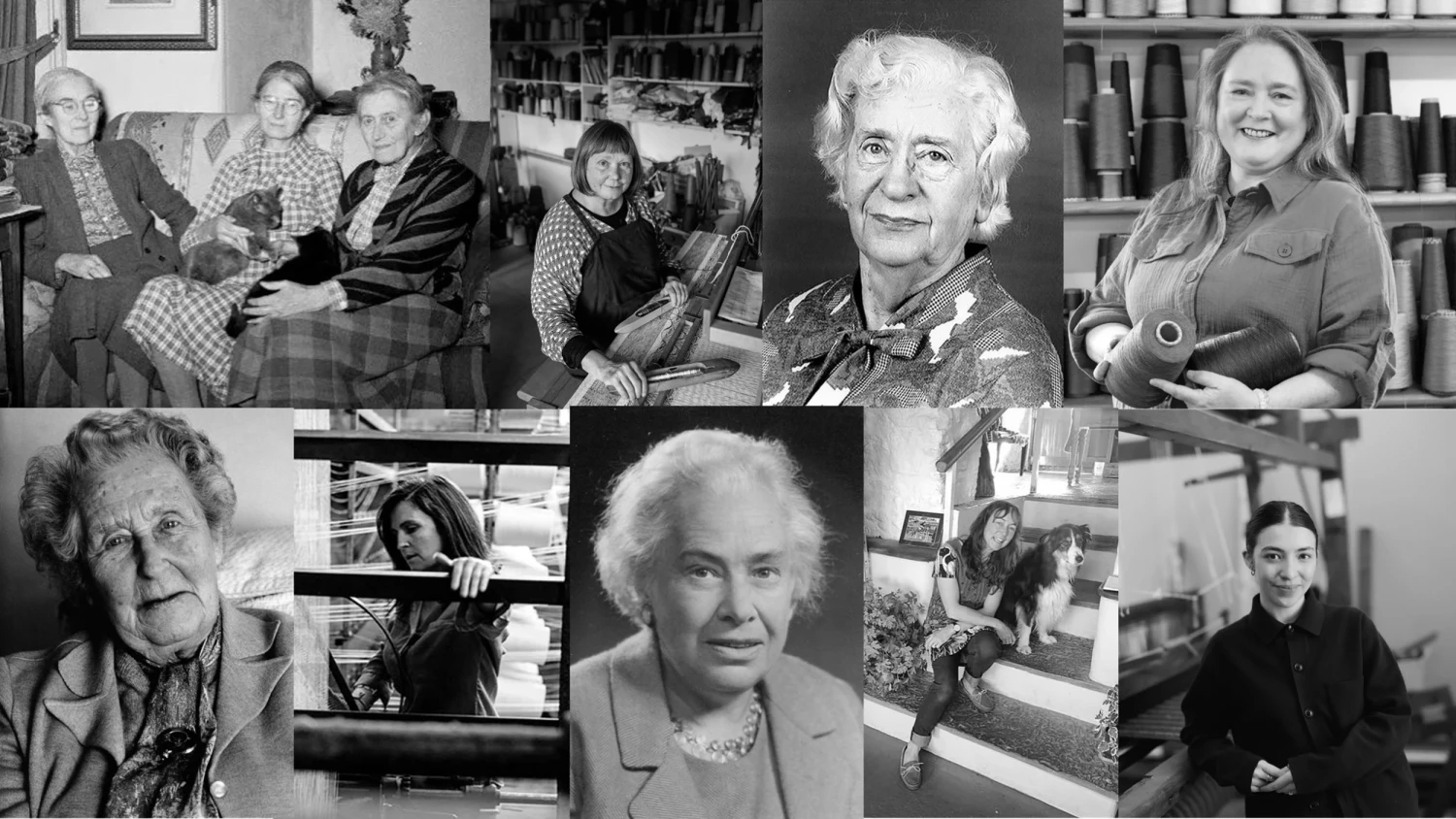
Woven Networks, portraits of women weavers, educators and organisers involved in hand-weaving in Ireland.
Research
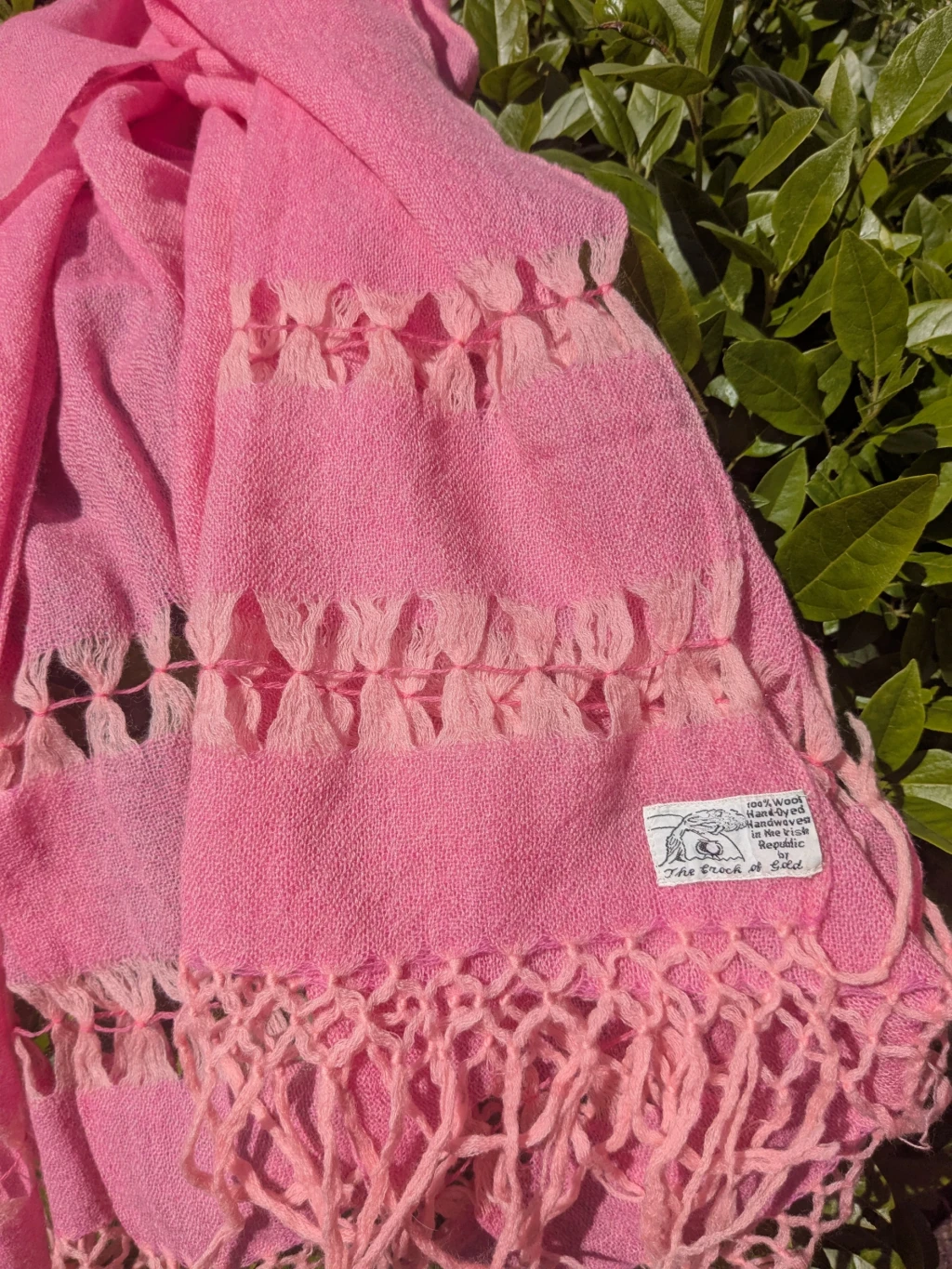
Crock of Gold, pink scarf, 100% wool.
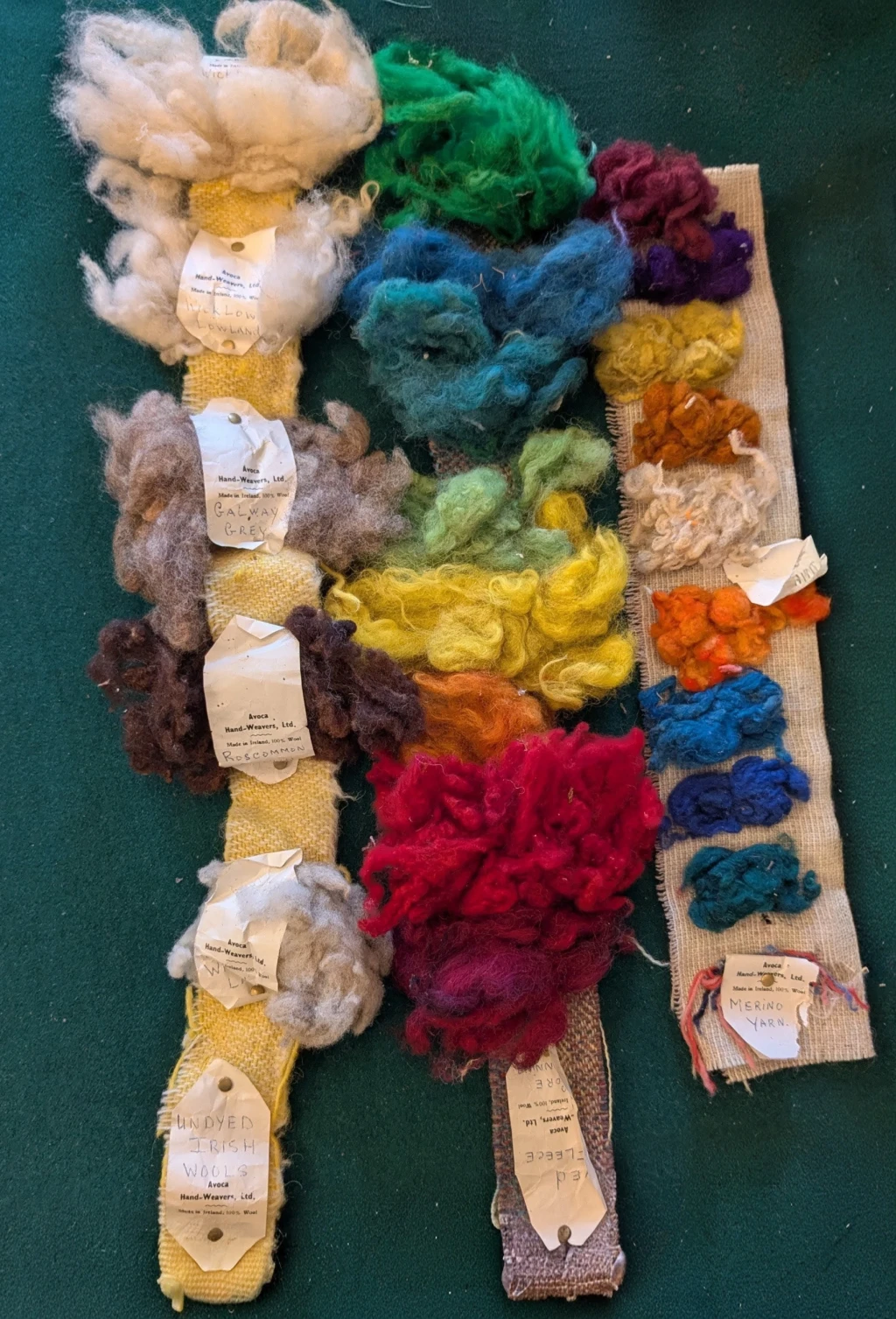
Wool and dye samples from the time of the Wynne Sisters at Avoca Handweavers, Ballymore House Collection.