Bethan Lawson
she/her
Architectures of Recovery: Gendered Labour and the Design of Post-Genocide Rwanda
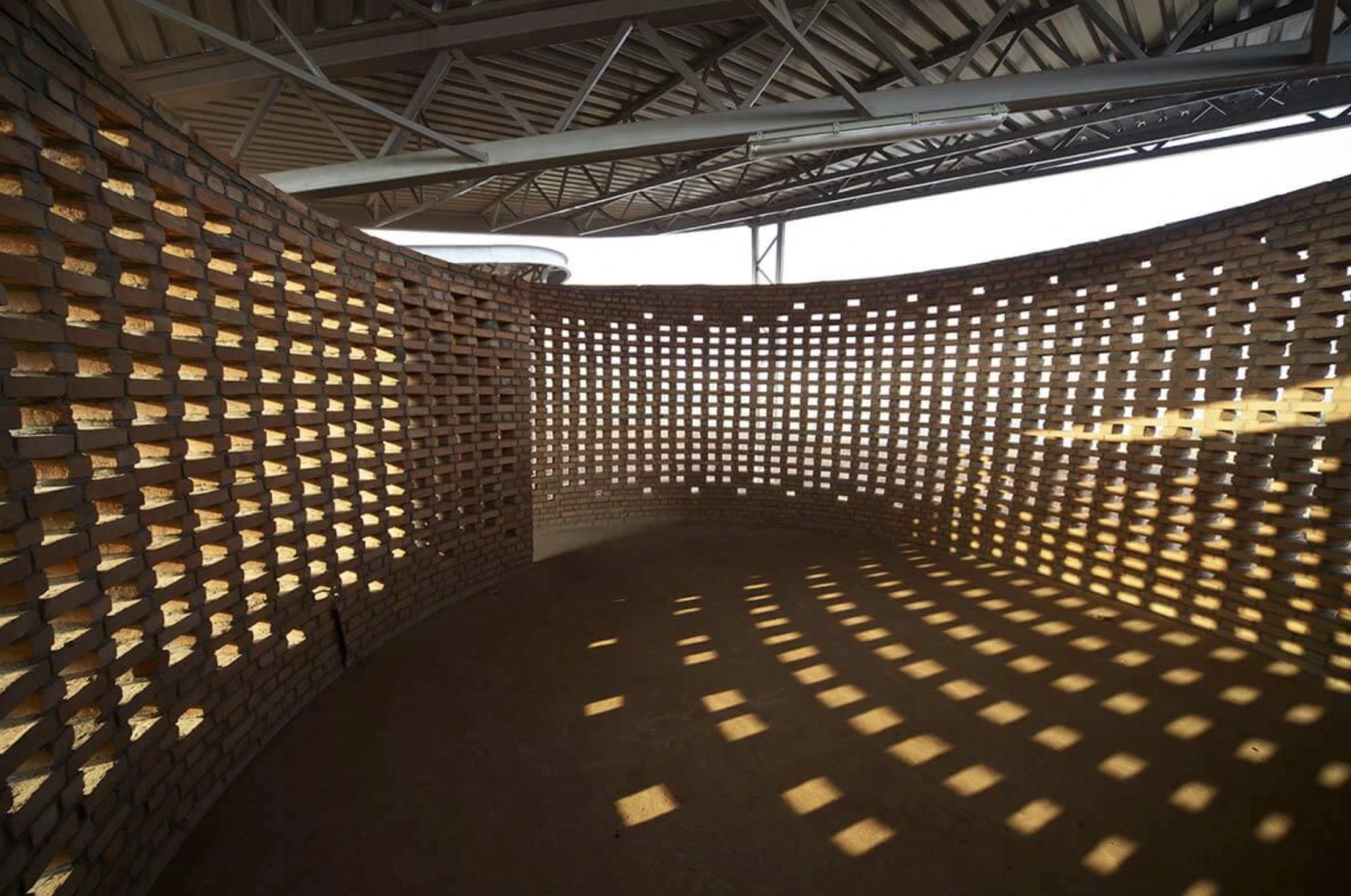
This thesis analyses the spatial organisation of labour in post-conflict Rwanda, demonstrating how the architecture of education, governance, agriculture and domestic space shapes and intensifies women’s labour burdens. Positioned within architectural and feminist spatial theory, this research challenges the idea of space as a purely physical entity. It argues that space is socially produced, designed to organise behaviour, and actively participates in shaping systems of labour, gender relations, economic agency and the mediation of trauma recovery. I use the Women’s Opportunity Centre in Rwanda as a key case study to examine how spatial design can materialise and reinforce forms of gendered labour in post-conflict contexts.
Through visual and architectural analysis, the project examined how the space empowers women daily by redistributing the burden of unseen labour and creating new forms of collective support and agency in the aftermath of violence. Existing research on post-conflict reconstruction frequently emphasises political and economic recovery, overlooking how architectural space further embeds gendered expectations and constraints. Addressing this gap, this thesis applies Henri Lefebvre’s theory of socially produced space, through a feminist perspective, to demonstrate how the built environment functions as social, economic and psychological infrastructure.
Through theoretical critique, historical and architectural analysis, and a spatial case study, this thesis demonstrates that architecture is deeply entrenched within the social systems it appears to merely house, and critically, it has the capacity to reconfigure them.